Data Driven Procedure
Static information to Dynamic Insights: The Future of Flight Deck Intelligence
Static information to Dynamic Insights: The Future of Flight Deck Intelligence
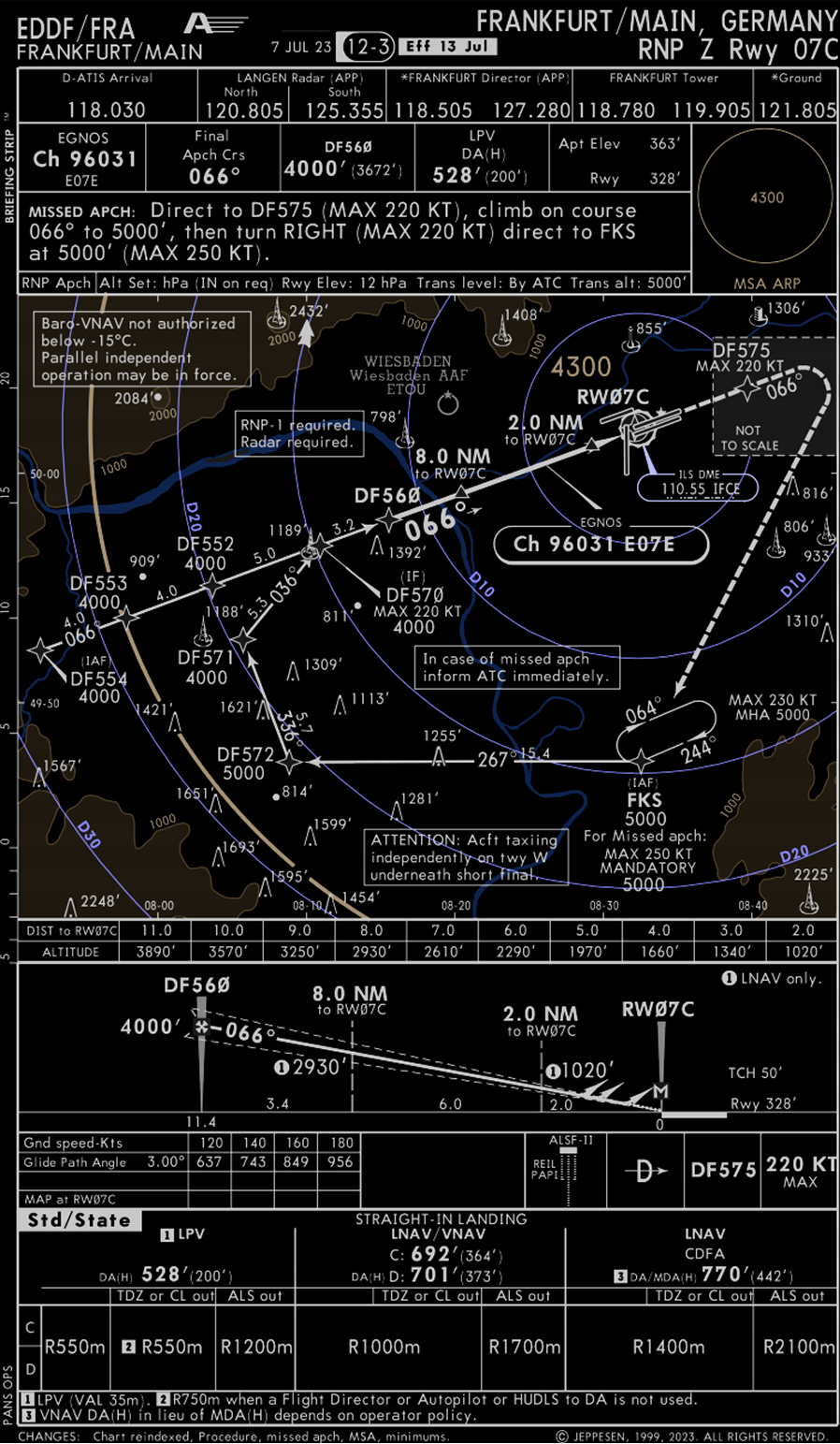
Transitioning from static to data-driven procedures means reimagining the information structure as well as how pilots consume information.
I led the design to create a workspace that stays clean at a high level and reveals granular, relevant details according to the flight phase and aircraft. This shift from ‘searching’ for data to ‘receiving’ it has redefined operational efficiency for pilots.
1. Mitigation of cognitive information overload:
Filtering out mission-irrelevant noise and delivering only context-aware, critical information to pilots during high-workload flight phases.
2. Growing demand of tailored procedures:
Meeting the high market demand for ‘Tailored Charts,’ by removing irrelevant data layers and displaying protocols while aligning with safety requirements.
3. Pioneering data-driven charting architecture:
Establish market leadership as a pioneer in data-driven procedures, setting a new industry standard for the future of digital flight solutions.
1. Strict regulatory compliance:
Ensuring 100% adherence to global aviation standards (e.g. FAA, EASA, and ICAO), where any design deviation could impact flight safety.
2. Various data architectures:
Harmonizing fragmented data parameters and legacy architectures into a single, unified output without compromising data integrity or processing speed.
3. Minimizing Cognitive Friction & Learning Curve:
Balancing radical digital innovation with the visual familiarity of legacy charts to minimize the pilot’s learning curve and mitigate resistance to changing the known patterns.
1. Mission-critical clarity:
Enhancing the situational awareness by dynamically filtering out irrelevant data layers and highlight mission-critical information for the current flight phase.
2. Scalable operational agility:
Ensuring that the interface adapts to the airline’s specific safety protocols rather than forcing a one-size-fits-all approach.
3. Seamless Data Interoperability & Future-Proofing:
Setting a new industry standard with that synchronizes various data sources into a unified, responsive interface, bridging the gap between legacy reliability and modern digital intelligence.
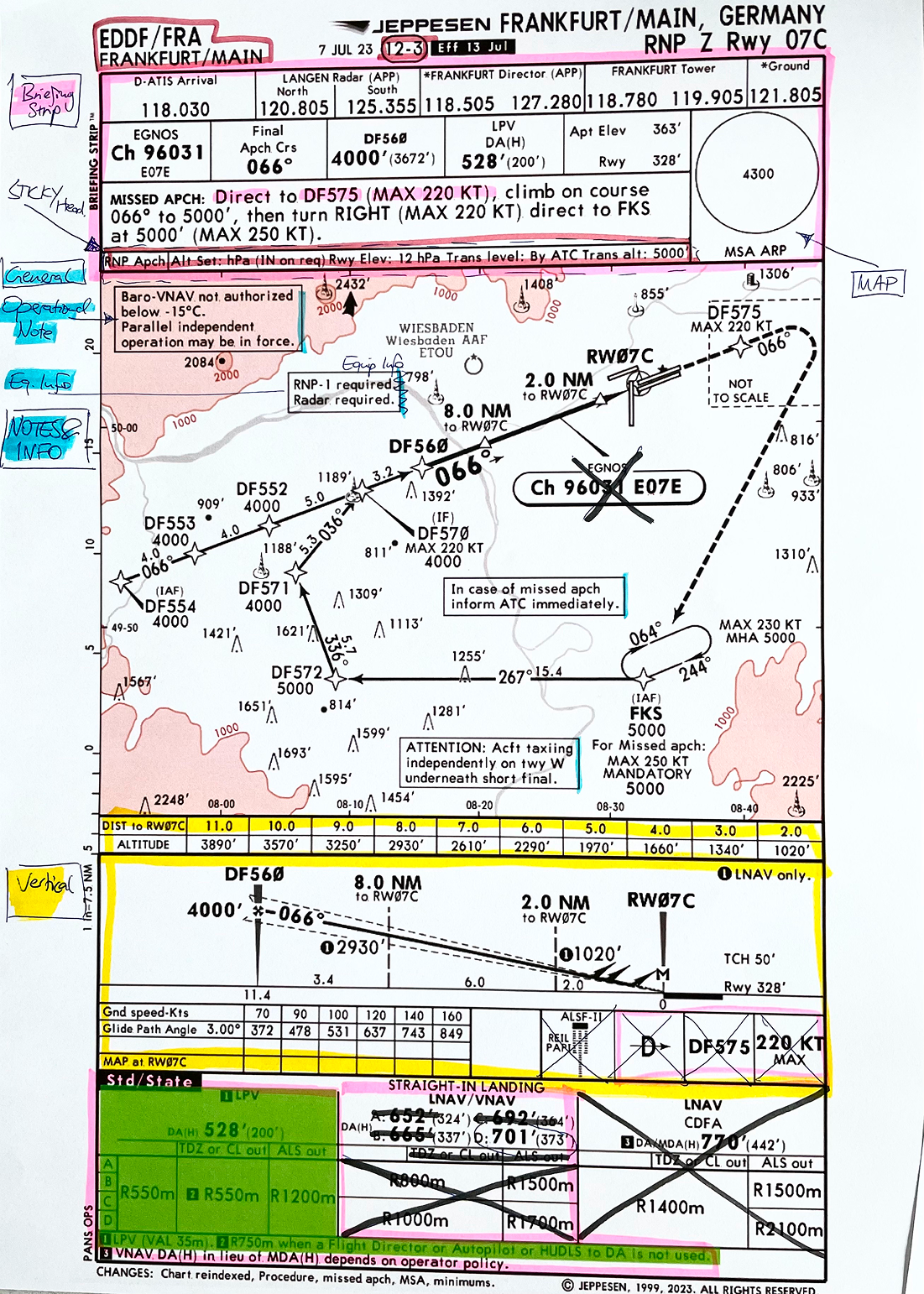
Static charts impose a severe cognitive burden on pilots by cramming every possible operational scenario into a single view. This forces pilots to manually filter out irrelevant data during high-stress flight phases.
For instance, this Frankfurt Airport chart displays all landing variations simultaneously, regardless of aircraft category, engine type, or onboard equipment. Although a pilot only operates one specific aircraft and needs tailored data, they are forced to navigate through visual noise.
From Information Overload to Streamlined Focus
The transition to dynamic data extends to vertical navigation.
I reimagined the Vertical Profile and Minimums as interactive components rather than static legends. What was once a complex grid of numbers is now a prioritized, mission-specific guide that enhances situational awareness during the most critical phases of flight.
Intelligent Profile Views: From Static Sections to Interactive Insight
The transition to dynamic data extends to vertical navigation. We reimagined the Vertical Profile and Minimums as interactive components rather than static legends. What was once a complex grid of numbers is now a prioritized, mission-specific guide that enhances situational awareness during the most critical phases of flight.
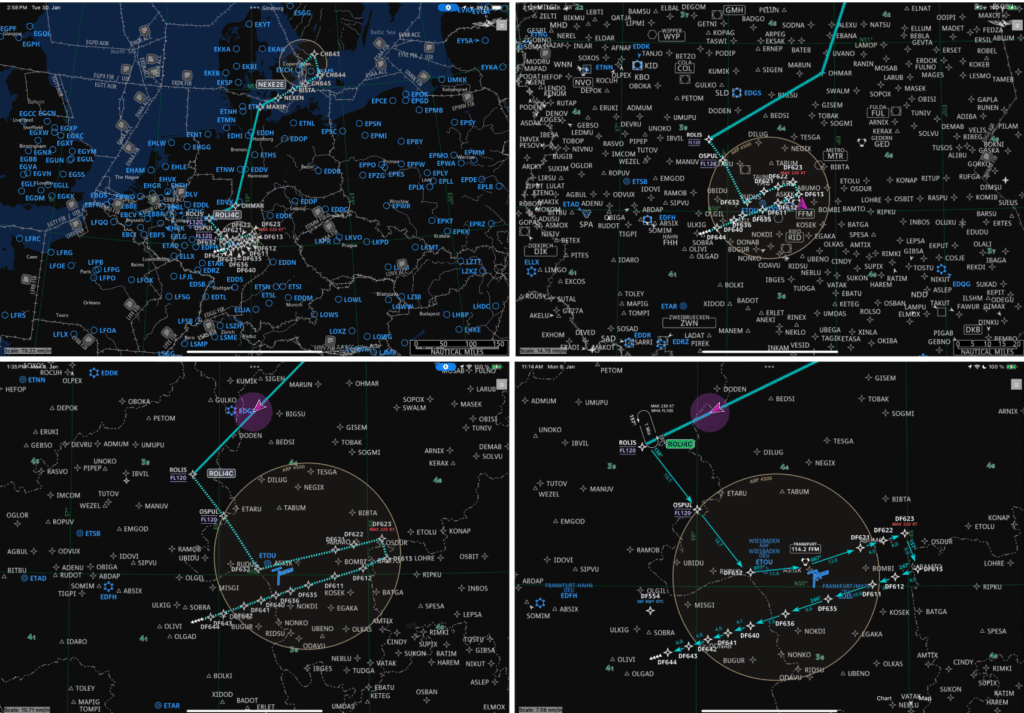
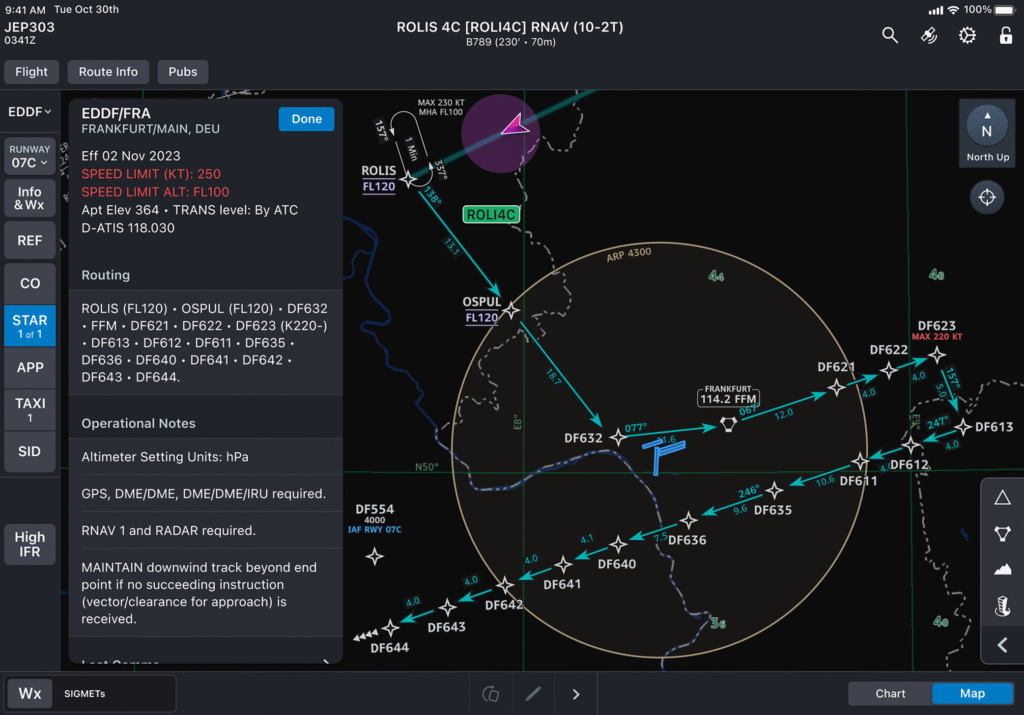
In the legacy system, Departure and Arrival were isolated modules, creating a fragmented experience for pilots. My role was to bridge these phases by integrating them with the existing Enroute and airport data, creating a single, continuous workflow.
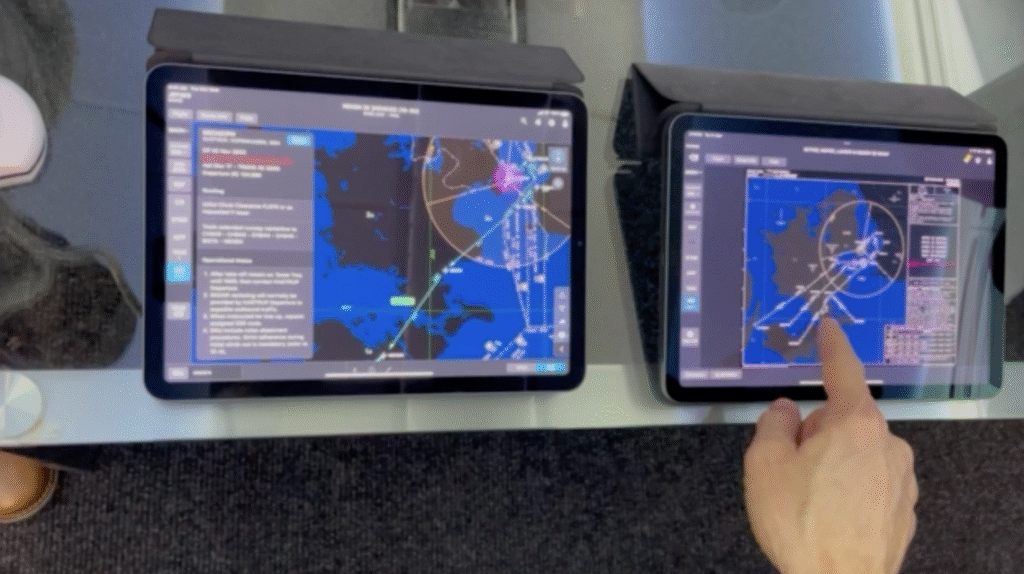
Immersive testing with three pilots in an aircraft simulator
Designing for the flight deck requires a delicate balance of innovation and strict compliance. Through extensive co-creation workshops with pilots, we mapped out and refined the core user journey across countless ideation cycles. To stress-test these concepts, we moved into an aircraft simulator for immersive user validation. Operating under high regulatory standards pushed us to be more precise, ultimately proving that our final design drastically reduces cognitive load and enhances operational efficiency when it matters most.